|
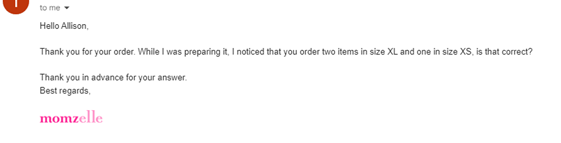
I don’t know if it was actually a person who noticed this, or if they had an algorithm that flagged orders like mine (although I hope it was the latter). What I do know is that I definitely did not mean to order that XS, and I was able to request the change directly via this email. Sure, I could have received the order and returned one, but that would have been a hassle for me and for them. By being proactive, they were not only making an impact on me (I’m still talking about it 6 years later); they were also saving themselves some time after the fact. There’s something else about their email. It felt disarming for me. In no way did I feel judged or like I needed to defend my error. It had an air of curiousity. This is so critical when working with people, especially those who have been told by society that their experiences are individual, rather than systemic. Whether you call them clients, consumers, people, folks, what matters is that you see their humanity and treat them as though they deserve your respect and care. When I work with organizations who say ‘we want our clients to feel (included, valued, respected)’, I often flip it around and ask if they do include, value, and respect them. People are only going to feel included when you truly believe that they have every right to be, and intentionally find ways to tailor your services to meet their unique needs. You have to be intolerant of anything less than inclusion*. This doesn’t mean that you can or should change everything overnight. When you hear from someone that a policy or practice creates a barrier, greet it with curiosity to understand what about it creates a barrier? What are ways that you could remove that barrier? How might removing the barrier affect other groups, and is there a way to find a mutually beneficial solution? It’s a daily commitment to truly value the people you support, and it will not only improve your services, it will make you feel good.
|